| Size | 1kg, 250ml, 500ml |
|---|
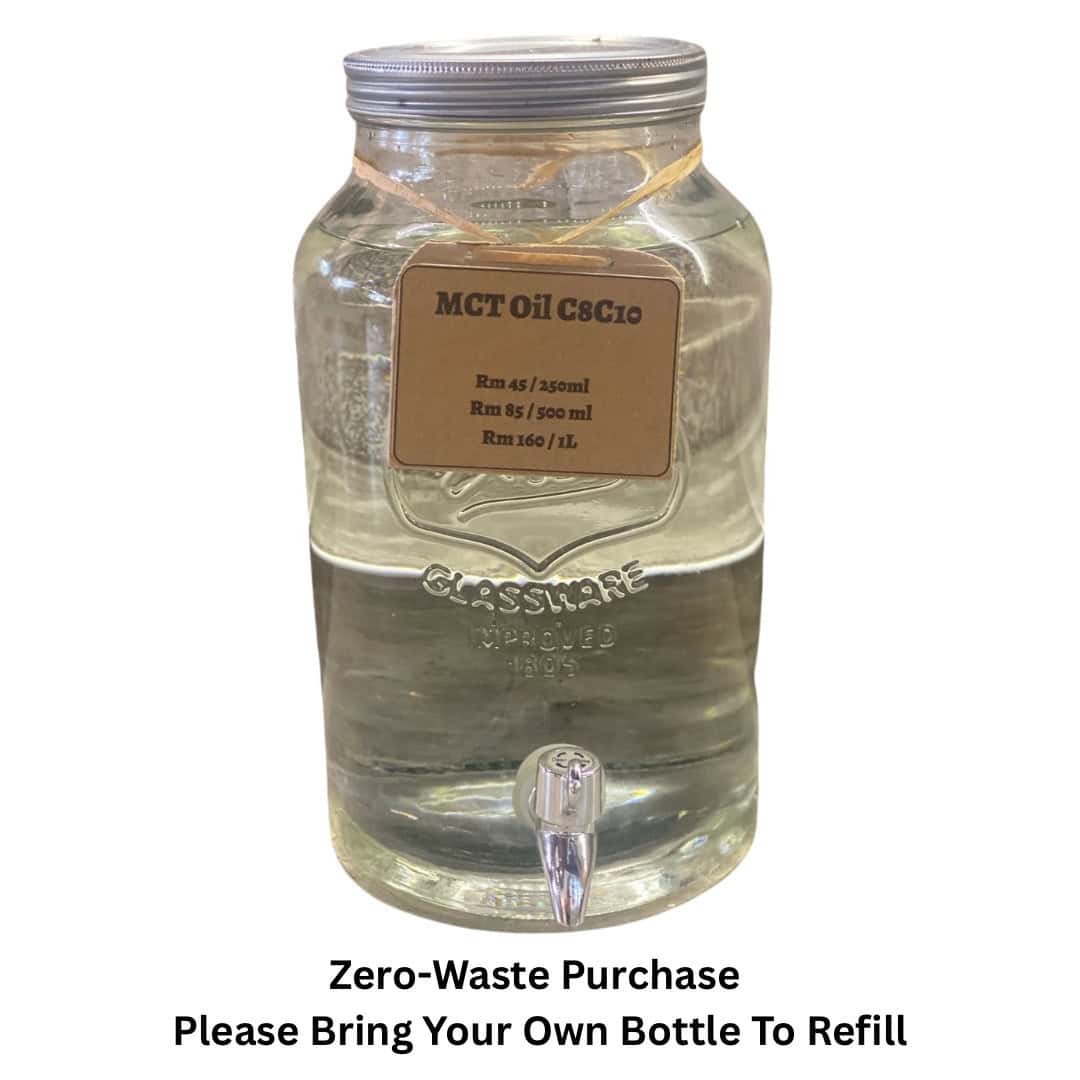
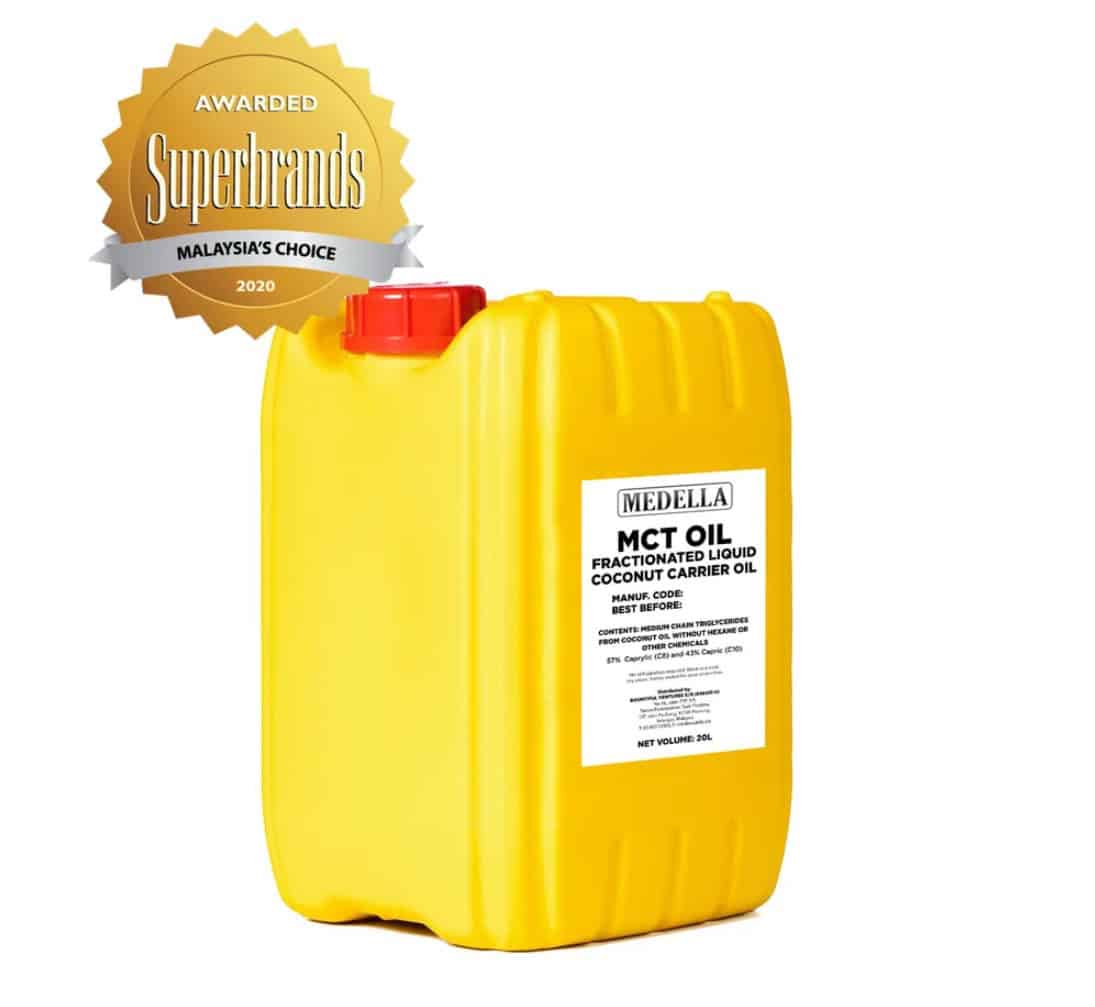
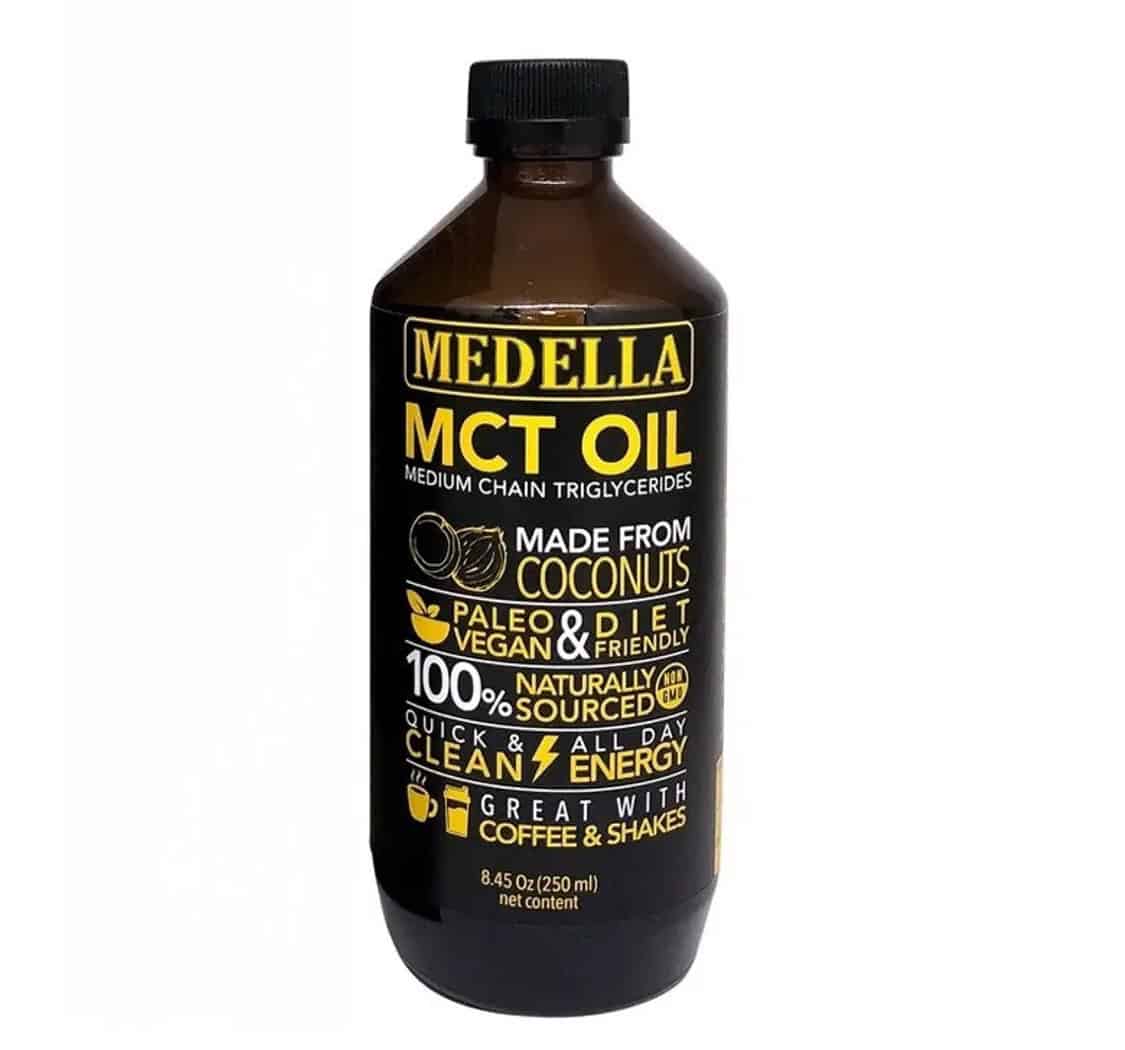
MCT Oil C8C10
Price range: RM45.00 through RM160.00
Kind Note : Zero Waste Product, kindly bring your own sanitise clean bottle to refill our McT Oil.
Product information : Medella
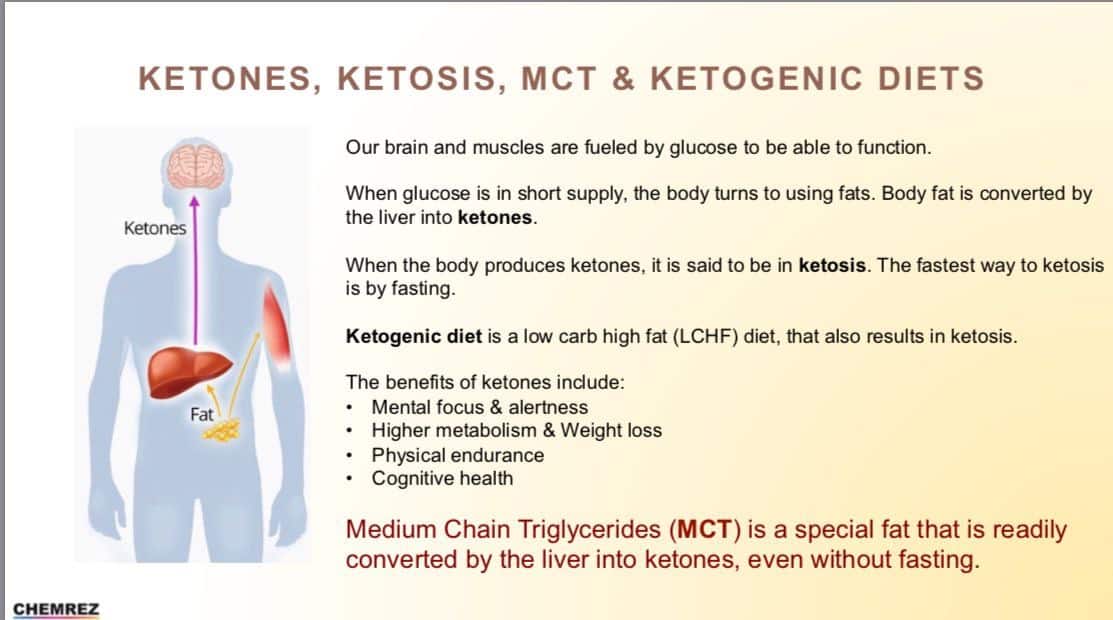
Medium-Chain Triglycerides (MCTs) are “healthy fats” with a chemical structure that allows the body to digest them easily. Most fats are broken down in the intestine and remade into a special form that can be transported in the blood. MCTs, however, bypass the digestion process intact and are taken into the bloodstream where they are used as quick energy for the body.
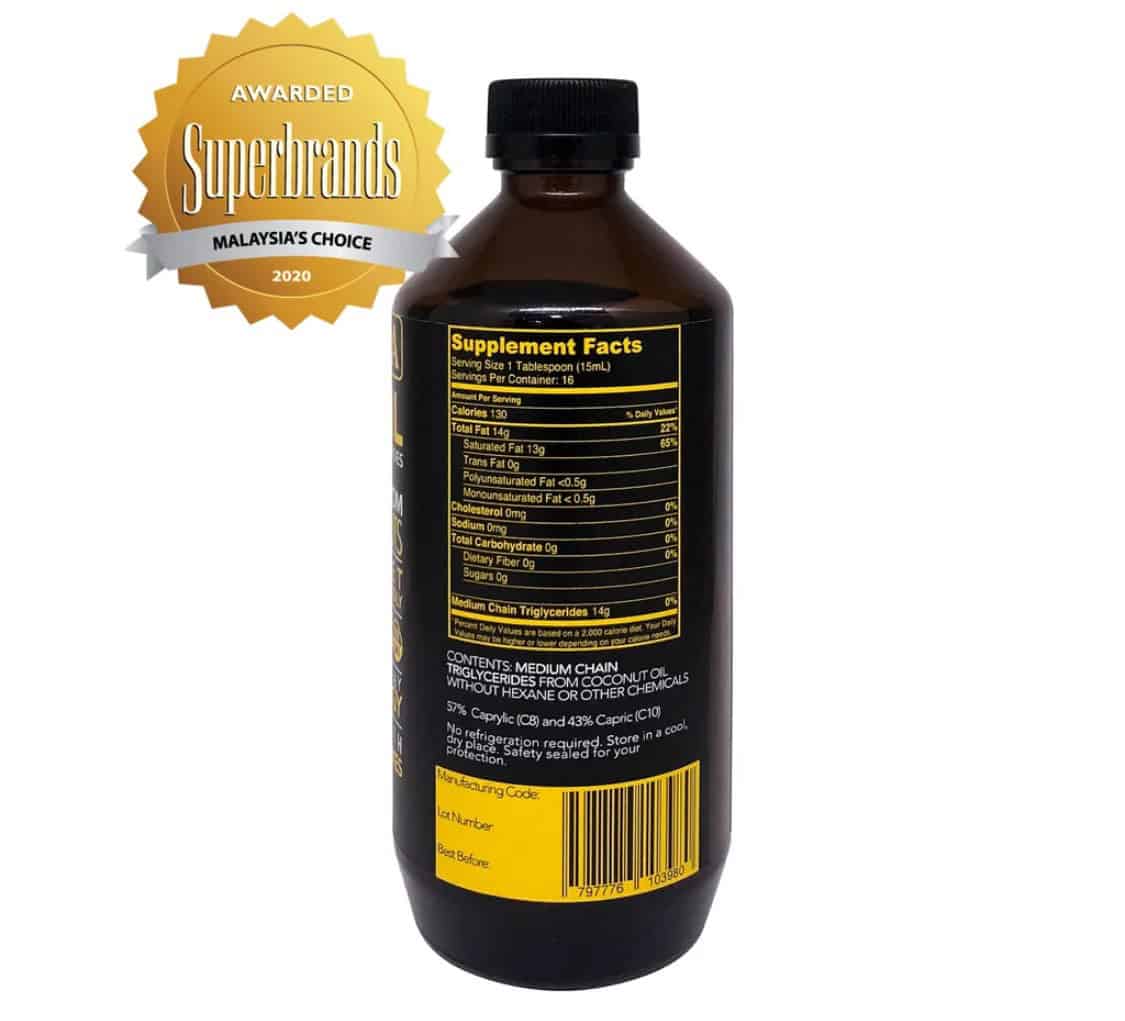
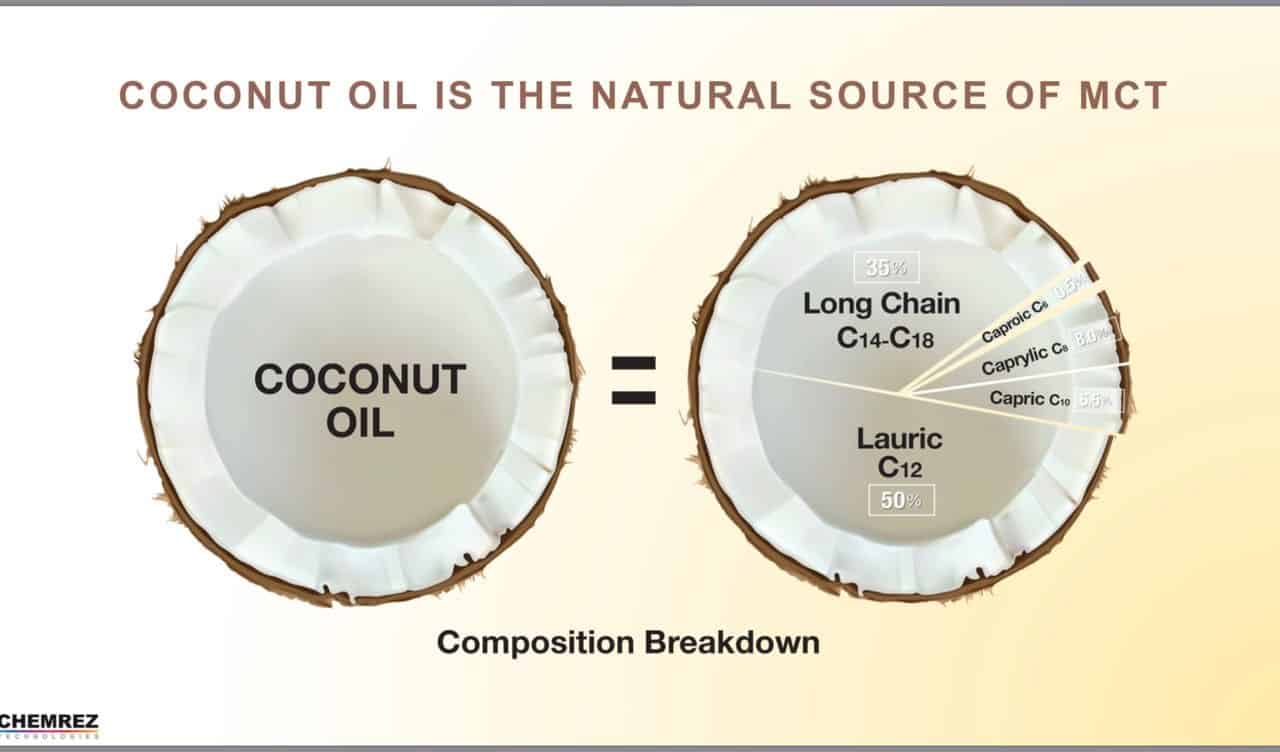
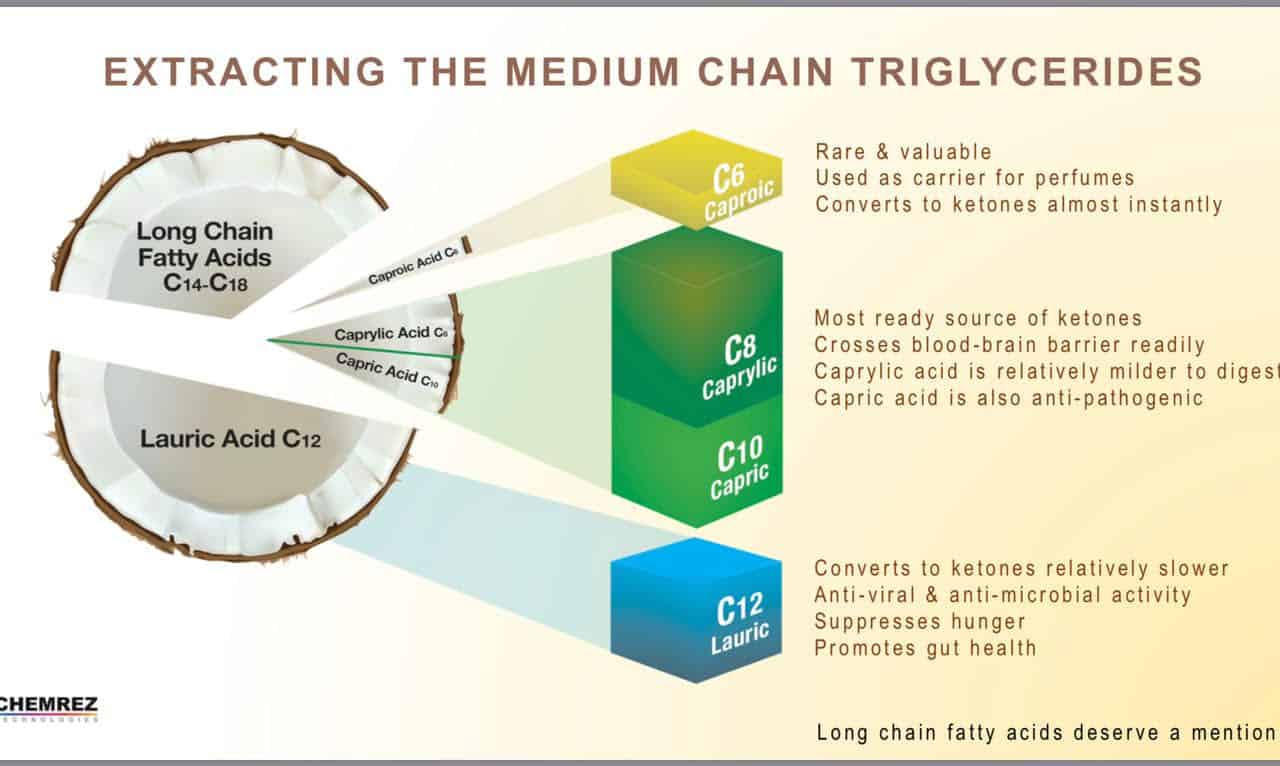
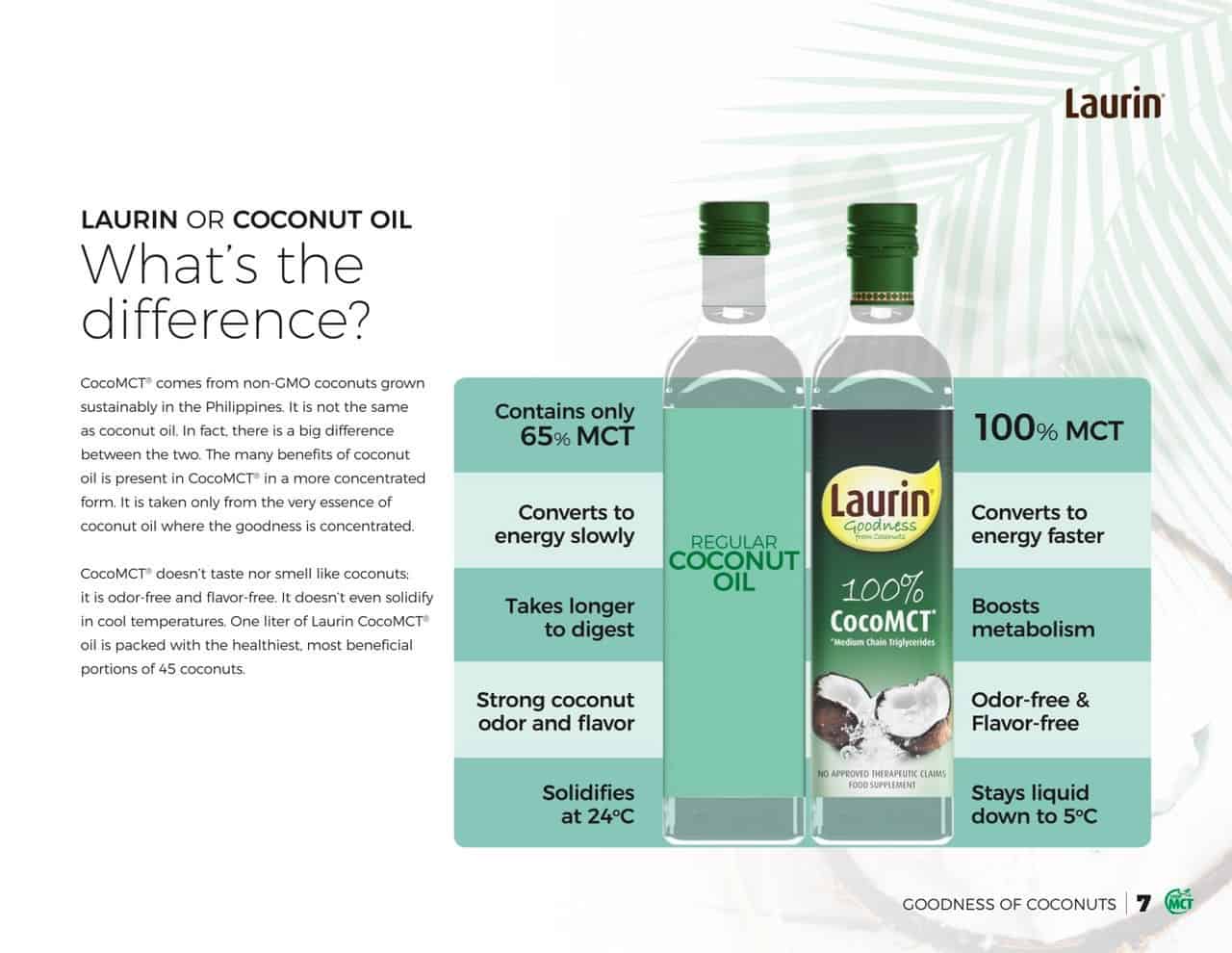
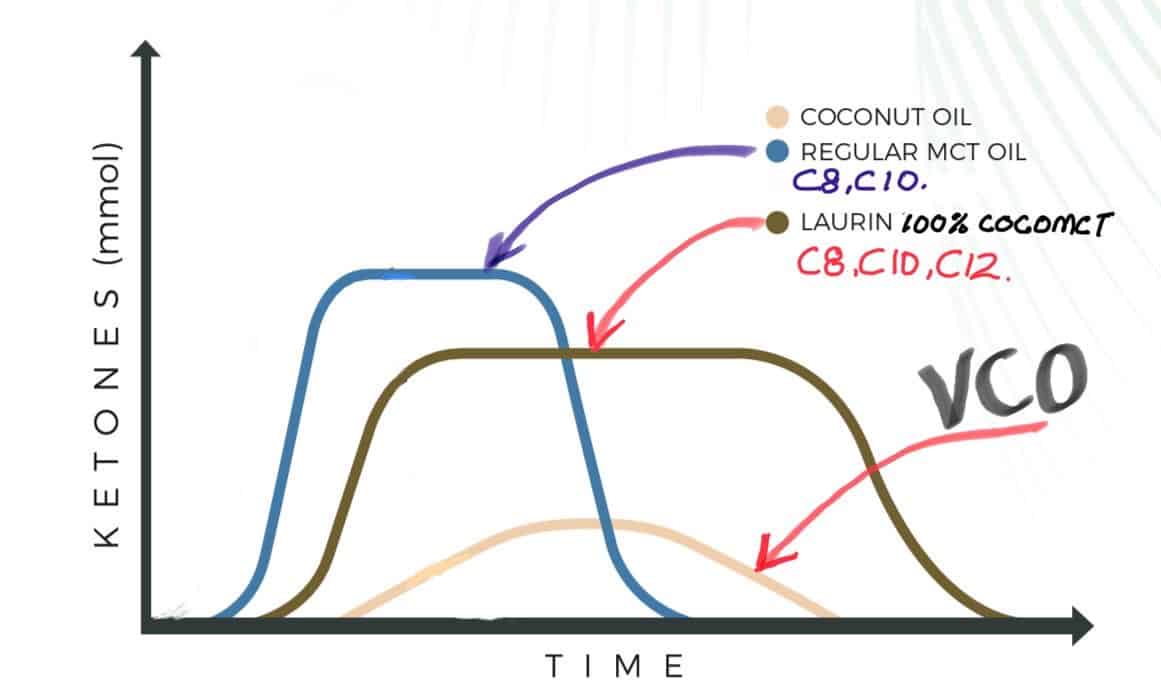
Medella MCT Oil is derived purely from coconut oil and contains a mix of 57% Caprylic (C8) and 43% Capric (C10) fatty acids with only trace amounts of lauric acid; a pure form for MCT Oil compared to other conventional MCT Oil products.
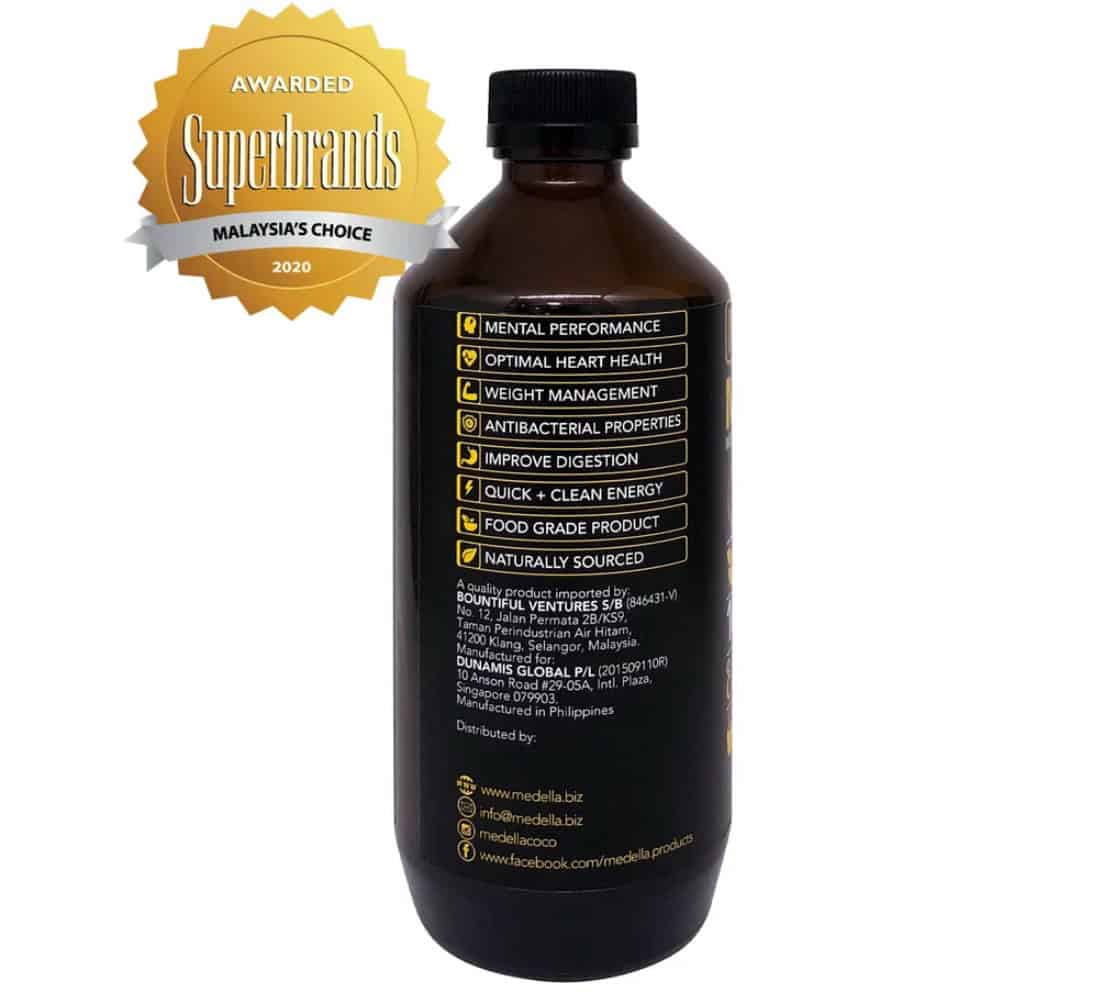
- Improved mental health
- Optimal heart health
- Weight management
- Antibacterial Properties
- Improved digestion
- Naturally sourced
- Quick + clean energy
- Food grade product
Coconut MCT : Medium Chain Triglycerides
C8 – 57% | C10 – 43% | C12 : 0%
Direction : Take 1-2 Tablespoons directly with meals or as desired. It can be taken directly or mixed with food or beverages.
Country of Origin : Philippines
Additional information from AI google :
Elaboration:
-
-
MCTs are triglycerides with fatty acids containing 6 to 12 carbon atoms. These are classified by the number of carbon atoms in their fatty acid chain (C6, C8, C10, C12).
-
-
-
Lauric acid (C12) is the fatty acid with 12 carbon atoms. It’s found in coconut oil, but is often excluded or present in small amounts in MCT oil.
-
-
-
While C12 is technically an MCT, it’s often removed or present in smaller quantities in pure MCT oils. This is because its longer chain length can make it slower to digest and absorb compared to C8 and C10. Additionally, some argue that lauric acid may act more like a long-chain triglyceride (LCT) in the body.
-
-
-
C8 (caprylic acid) and C10 (capric acid) are generally preferred in MCT oils because they are easily absorbed and utilized as a source of energy.
-
-
-
Despite being excluded in some MCT oils, lauric acid does have antimicrobial properties and other potential health benefits.
How MCT oil is made :
MCT oil is created through a process called fractionation, which extracts and isolates medium-chain fatty acids (MCFAs) from sources like coconut oil or palm kernel oil. These extracted MCFA’s, primarily caprylic acid (C8) and capric acid (C10), are then esterified with glycerin to form MCT triglycerides.
Here’s a more detailed look at the process:
-
-
This step involves separating the MCTs from other fatty acids in coconut or palm kernel oil. This is done by using distillation or other methods that take advantage of the different boiling points of fatty acids.
-
-
The isolated MCFA’s are then combined with glycerol (or glycerin) through a process called esterification. This reaction forms the MCT triglycerides.
-
-
The MCT oil may undergo further refining steps, such as filtration, deacidification, bleaching, and deodorization, to ensure purity and improve its quality.
-
-
The resulting MCT oil undergoes quality analysis to ensure it meets the desired specifications and is suitable for consumption.